A biopic should do one essential thing: reveal the person behind the persona. It doesn’t have to be heroic. It doesn’t need to glorify or condemn. But it must offer insight—some emotional or psychological truth that helps audiences understand why the subject lived, created, and struggled the way they did.
The Michael Jackson movie fumbles this basic task.
Instead of a layered portrait, we get a reheated collage of tabloid headlines, grainy archive footage, and stage performances stripped of context. The film mistakes spectacle for storytelling. It assumes that showing Jackson moonwalking across a stage or standing trial is the same as understanding him. It isn’t.
This isn’t just a missed opportunity. It’s a betrayal of what a biopic should be.
What a Biopic Ought to Achieve
At its best, a biopic transforms public myth into private reality. Consider Ray, which doesn’t just chronicle Ray Charles’ hits but digs into his addiction, his grief, and the moment he chooses music as both salvation and prison. Or Walk the Line, which frames Johnny Cash’s rise through the lens of love, guilt, and rebellion.
These films understand the formula: - Humanize the icon - Ground the legend in real pain - Show how genius is often born from fracture
The Michael Jackson movie ignores this playbook. It presents Jackson as a spectacle—alternately tragic, eccentric, and otherworldly—but never fully human. We see the glove, the hat, the sequins. We rarely see the man underneath.
The Problem of Surface-Level Storytelling
Biopics about artists risk becoming highlight reels. The Michael Jackson movie slips into this trap almost immediately.
- It follows a predictable rhythm:
- Childhood success with the Jackson 5
- Breakout solo fame
- Thriller explosion
- Tabloid scandals
- Legal battles
- Ongoing mystery around his personal life
- Death and legacy
This isn’t narrative. It’s Wikipedia with a soundtrack.
Worse, the film treats Jackson’s evolution as inevitable rather than interrogated. Why did he change his appearance? The movie shows the progression—lighter skin, changing nose—but refuses to explore the psychological or cultural forces behind it. Was it illness? Identity? Self-rejection? The biopic doesn’t say. It just shows the result and moves on.
Similarly, his relationships get reduced to caricatures. His bond with his father is framed as abusive—but we’re never shown how that abuse shaped his music or his emotional life. His friendships with celebrities are name-dropped but not examined. Even his relationship with children—central to both his art and his downfall—is handled with the subtlety of a courtroom summation.
Missing the Emotional Core
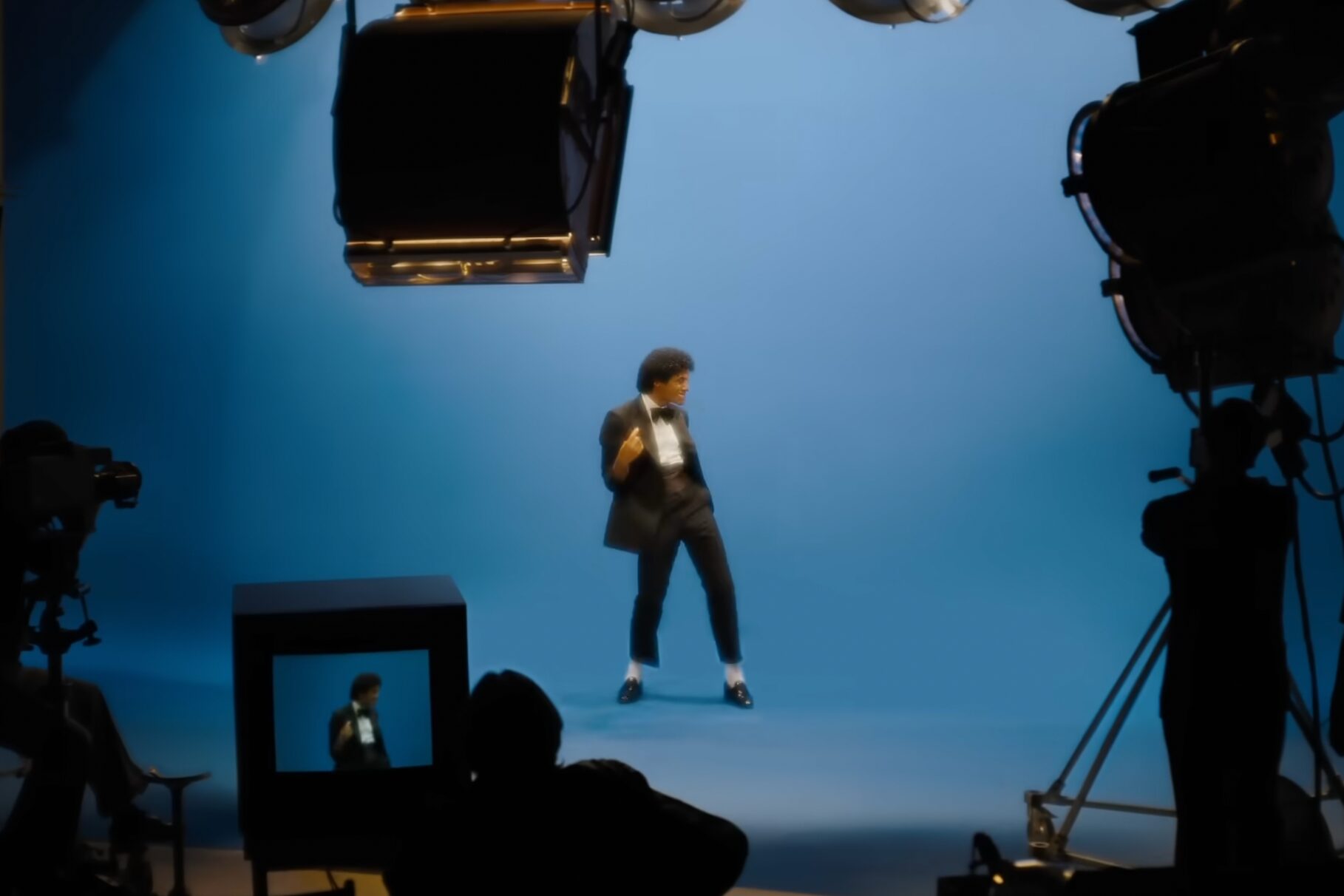
Jackson’s music was rooted in emotional extremes: longing, loneliness, the desire for escape. Songs like “Childhood,” “Stranger in Moscow,” and “You Are Not Alone” weren’t just lyrics—they were confessions.
Yet the biopic never connects those feelings to the man who wrote them.
Take Leaving Neverland. Love it or hate it, the documentary forces viewers to sit with discomfort. It doesn’t excuse or condemn—it presents testimony, tone, and silence as evidence. The Michael Jackson biopic lacks that courage. It wants the gravitas of serious drama without doing the emotional labor.
Instead, it leans on visual shorthand: - A shot of Jackson staring into a mirror = identity crisis - A child laughing in a theme park = innocence - A courtroom sketch = guilt by association
These aren’t insights. They’re lazy metaphors.
A proper biopic would have explored how Jackson used music to rewrite his reality. How “Billie Jean” channels paranoia. How “Smooth Criminal” mirrors a life under siege. How “Earth Song” reflects spiritual yearning. The film mentions the songs, but never dissects them. That’s like reviewing a painter without looking at the brushstrokes.
The Risk of Mythologizing Instead of Understanding
One of the film’s most troubling failures is how it handles Jackson’s contradictions.
He was a global superstar who claimed to have no friends. He championed childlike wonder while being accused of crossing sacred lines. He preached unity while living in increasing isolation.
These aren’t plot points. They’re psychological anchors.
A strong biopic would use those tensions to build empathy—even if that empathy is uneasy. It would ask: How does a person become untethered from reality when the world treats them as a god?
Instead, the movie either avoids the questions or answers them with clichés. Jackson is portrayed as naive, eccentric, or manipulated—but never fully accountable or fully complex. He’s either a victim or a mystery, never both.
That’s not just reductive. It’s disingenuous.
Real people are messy. Jackson’s life defied easy categorization. A biopic that pretends otherwise fails its subject.
Why This Failure Matters Beyond One Film
The problem isn’t just that this movie is poorly made. It’s that it sets a precedent.
When studios greenlight biopics about Black cultural icons and reduce them to trauma, spectacle, and scandal, they reinforce a dangerous narrative: that Black genius is inherently unstable, self-destructive, or in need of decoding by outsiders.

Compare this to Elvis, Baz Luhrmann’s flamboyant but emotionally grounded take on Presley. That film doesn’t shy from exploitation or complicity. But it also shows Elvis as an active agent—making choices, chasing highs, wrestling with identity. He’s flawed, but present.
The Michael Jackson movie denies Jackson that agency. He’s acted upon more than he acts. The world shapes him; he rarely shapes the world back.
That’s not just bad storytelling. It’s a disservice to history.
What a Better Michael Jackson Biopic Would Look Like
Imagine a film that starts not with Motown, but with Jackson alone in the studio at 3 a.m., obsessively layering vocal tracks on “Beat It.” Imagine a scene where he watches the Thriller premiere not with joy, but dread—realizing he’ll never top it. Imagine a quiet moment where he sketches Neverland not as a fantasy world, but as a prison he designed himself.
A real biopic would: - Use his music as narrative spine - Treat his voice as a character—shifting, evolving, fraying - Explore his creative process, not just his fame - Give weight to his spiritual beliefs and artistic ambitions - Acknowledge allegations without reducing him to them
It would be uncomfortable. It would be unresolved. But it would feel true.
Instead, we get a film that checks boxes but avoids depth. It tells us Jackson was strange, lonely, and misunderstood—but so was every creative genius who ever lived. What made him that way? The movie doesn’t care.
Studios Keep Repeating the Same Mistake
This isn’t the first time a music biopic has failed a Black icon.
- All Is by My Side reduced Jimi Hendrix to a series of gigs and groupies.
- Get On Up had moments of brilliance but still treated James Brown as a force of nature, not a man.
- Respect turned Aretha Franklin into a checklist of hits and hardships.
There’s a pattern: focus on the external, avoid the internal. Highlight the pain, skip the introspection. Celebrate the voice, ignore the mind.
The Michael Jackson movie fits right in.
Until studios trust audiences to handle complexity—to sit with ambiguity, contradiction, and unresolved trauma—these films will keep falling short.
Conclusion: A Biopic Should Be an Act of Understanding
The basic duty of a biopic is not to defend, excuse, or idolize. It’s to understand.
Jackson deserved that. Not a sanitized version. Not a tabloid recap. But a serious, searching look at the man who changed music, redefined performance, and paid a devastating price.
The current film doesn’t rise to that challenge. It stalls at the surface, mistaking fame for familiarity.
If we’re going to keep making biopics about cultural titans, they need to do more than repackage history. They need to interpret it. To question it. To feel it.
Otherwise, what’s the point?
Frequently Asked Questions
Why do biopics about Michael Jackson struggle to feel authentic? Most focus on scandal and spectacle, avoiding the psychological depth needed to understand his evolution as an artist and individual.
Does the movie address the abuse allegations seriously? It references them but handles them superficially, using them as narrative punctuation rather than engaging with their impact.
Is the film accurate in its timeline of Jackson’s life? Factually, many events are in order—but emotional and creative causality is missing, making it feel hollow despite surface accuracy.
How does the movie portray Jackson’s relationship with his family? It reduces it to abuse and control, showing Joe Jackson as a villain but not exploring how that dynamic shaped Michael’s art or decisions.
Could a better Jackson biopic be made? Yes—but it would need to prioritize emotional truth over tabloid drama, and treat his music as central to his psychology.
What’s the biggest flaw in the film’s storytelling? It confuses chronology with insight. Just because events are shown in order doesn’t mean they’re meaningful.
Who should have directed a Jackson biopic? Someone unafraid of ambiguity—like Spike Lee, Barry Jenkins, or Ava DuVernay—who could balance cultural context with intimate storytelling.
FAQ
What should you look for in The Michael Jackson Movie Fails at the Basic Duty of a Biopic? Focus on relevance, practical value, and how well the solution matches real user intent.
Is The Michael Jackson Movie Fails at the Basic Duty of a Biopic suitable for beginners? That depends on the workflow, but a clear step-by-step approach usually makes it easier to start.
How do you compare options around The Michael Jackson Movie Fails at the Basic Duty of a Biopic? Compare features, trust signals, limitations, pricing, and ease of implementation.
What mistakes should you avoid? Avoid generic choices, weak validation, and decisions based only on marketing claims.
What is the next best step? Shortlist the most relevant options, validate them quickly, and refine from real-world results.