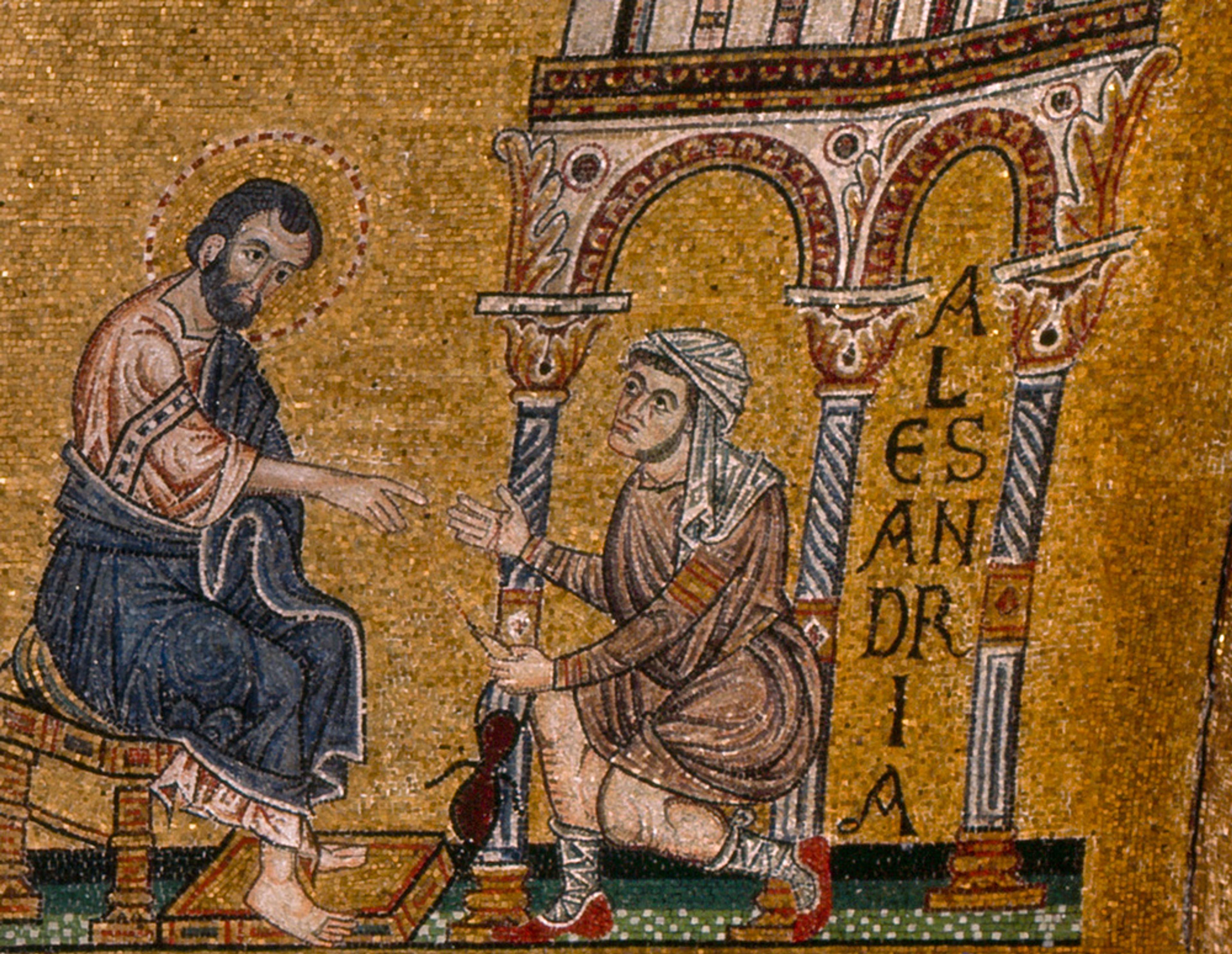
Medieval art didn’t just represent the human body—it weaponized it, sanctified it, and politicized it. Far from mere decoration, the body in illuminated manuscripts, cathedral sculptures, and altarpieces served as a frontline in the struggle between divine authority and earthly power. Every gesture, posture, wound, and gaze was coded with theological doctrine and political messaging, transforming flesh into ideology. This wasn’t art for aesthetics; it was art as doctrine made visible.
To understand this fusion of body, belief, and rule, we must look beyond beauty to function. The body in medieval art was not a neutral subject—it was a site where salvation was taught, power was justified, and social hierarchies were reinforced. Saints, kings, and sinners all bore the weight of symbolic meaning through their depicted forms.
The Body as Divine Vessel: Theological Encoding
In medieval Christian theology, the human body was both flawed and sacred—tainted by original sin, yet capable of bearing the divine. This paradox shaped how bodies were rendered in art.
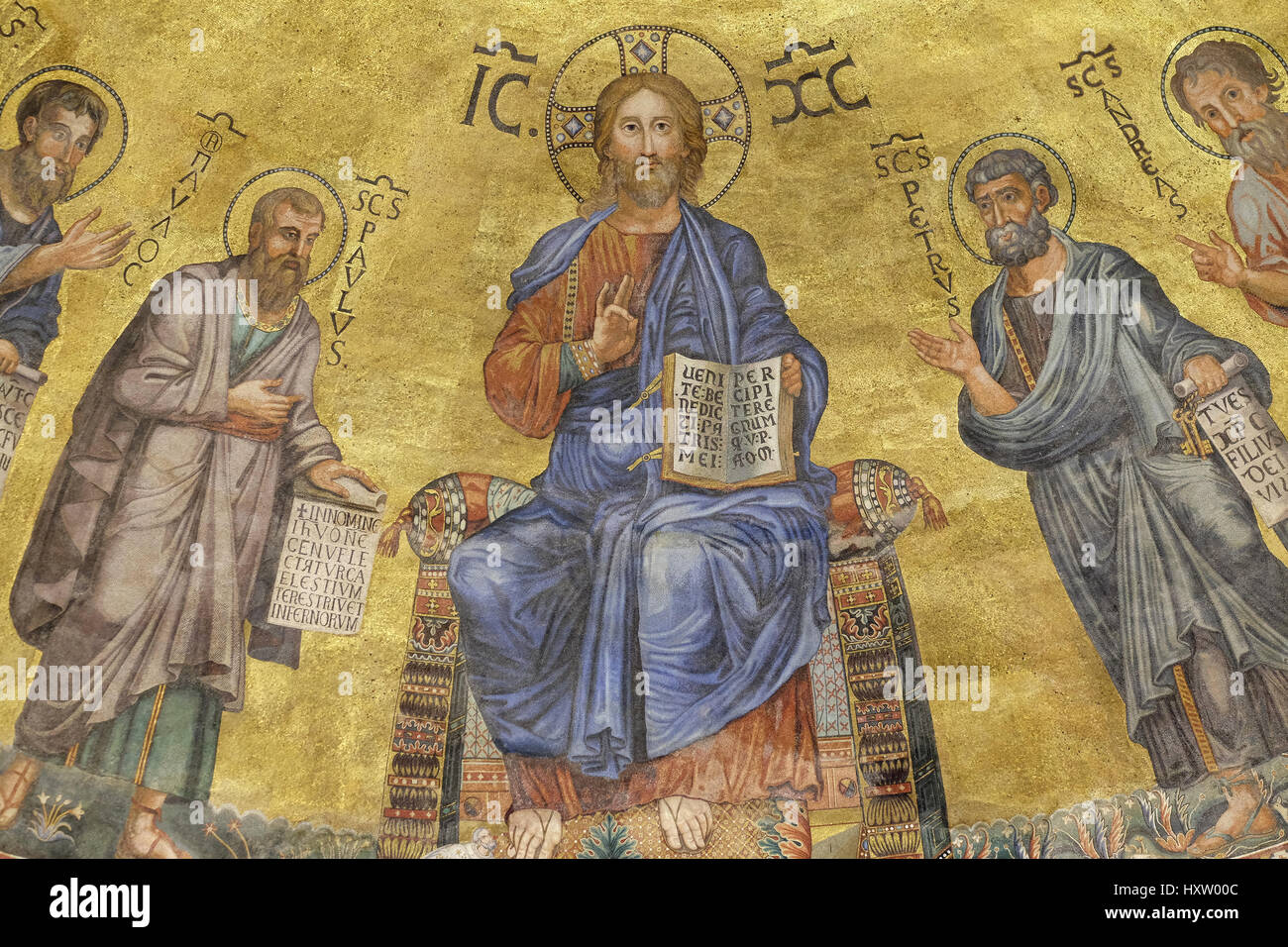
Christ’s body, for instance, wasn’t portrayed for realism. It was a theological statement. In Romanesque sculpture, such as the tympanum at the Abbey Church of Sainte-Foy in Conques, Christ appears rigid, frontal, and enthroned in majesty. His body is elongated, eyes wide and unblinking—a transcendent judge, not a suffering man. The wounds in his hands and feet are visible, but not bloody; they’re emblems of victory over death, not agony. This is Christus Triumphans, the triumphant Christ, whose body proves resurrection and divine authority.
Later, in the Gothic era, depictions of the Crucifixion shift. Artists begin to emphasize Christ’s physical suffering—his head slumped, body contorted, blood dripping. This is Christus Patiens, the suffering Christ. The increased realism isn’t about anatomical accuracy; it’s about emotional and spiritual engagement. Viewers were meant to empathize, to feel the weight of sacrifice in their own bodies. This shift reflects a broader theological movement—the rise of affective piety, which encouraged personal, emotional connection with Christ’s passion.
The bodies of saints followed similar symbolic logic. Saints were often shown with their attributes—the instruments of their martyrdom. Saint Lawrence appears with a gridiron, Saint Catherine with a broken wheel. These weren’t random accessories. They transformed the body into a narrative device. A single image could tell the story of martyrdom, faith, and divine reward. The saint’s body, even in death, radiated holiness. Scars became signs of election.
But this holiness wasn’t accessible to all. The peasant’s body, in contrast, was often depicted as crude, contorted, or grotesque—especially in marginalia. While the saint’s body ascended, the commoner’s body was shown laboring, eating, defecating, or being punished by demons. This visual dichotomy reinforced the idea that sanctity wasn’t inherent—it was earned through suffering, virtue, and, crucially, alignment with the Church.
Power Carved in Stone: Royal Bodies and Political Legitimacy
If the saint’s body proved divine favor, the king’s body proved earthly order. Medieval rulers knew that visual representation was as vital as military strength. Art became a tool of statecraft.
Consider the bronze doors of Saint Michael’s Church in Hildesheim. Emperor Otto III is shown being crowned by Christ himself. This isn’t just flattery—it’s political theology. The image asserts that Otto’s authority comes directly from God. His body, small in scale but central in composition, is framed by sacred figures and scriptural scenes. He isn’t just a ruler; he’s a vice-regent of Christ.
This concept—known as the “king’s two bodies”—held that the monarch had a physical body (mortal, flawed) and a political body (eternal, divine). Art collapsed these two into one image. In manuscript illuminations like those in the Coronation Gospels, kings are shown kneeling before saints or receiving relics, their postures humble but their garments lavish. They’re both human and holy.
Portraiture, even when stylized, served propaganda. Look at the equestrian statue of Charlemagne in Aachen (a later recreation, but based on tradition). He sits upright, calm, holding orb and scepter—symbols of universal rule. His body doesn’t strain; it commands. This isn’t a man on a horse. It’s an embodiment of Christendom itself.
Bodies of defeated enemies were just as carefully staged. In the Bayeux Tapestry, Harold Godwinson is shown with an arrow in his eye—whether accurate or not, the image served to legitimize William the Conqueror’s claim. Death in art wasn’t neutral; it was verdict.
Gender, Flesh, and Control: The Female Body in Medieval Imagery
If male bodies were sites of authority and salvation, female bodies were battlegrounds of temptation and purity.
Mary, the Virgin Mother, was the ultimate model of acceptable femininity. In countless altarpieces, she is shown seated, serene, with the Christ child on her lap. Her body is covered, her gaze downcast. She embodies humilitas and obedience. Yet even here, her body carries cosmic significance. In the Theotokos (God-bearer) icons, Mary’s body literally contains the divine. She is the new Ark of the Covenant.
But this sanctity is fragile. For every Virgin Mary, there are depictions of Eve, Mary Magdalene, or Jezebel—women whose bodies signify danger. In the Last Judgment frescoes of medieval churches, the damned are often shown naked, twisted, and violated by demons. Female figures among them are sometimes exaggerated in sexualized or grotesque ways, reinforcing the idea that female flesh is particularly susceptible to sin.
This duality extended to real women. Noblewomen could be patrons of art, but their portraits emphasized piety, not power. Hildegard of Bingen, though a visionary and composer, was depicted not as a scholar but as a receiver of divine light, her body passive, her hands raised in prayer.
Even female saints were often defined by their resistance to bodily desires. Saint Agnes, a virgin martyr, is shown with a lamb—symbol of purity. Her body is unblemished, untouched. The moment of her death is rarely shown; her triumph is in what she didn’t do: she didn’t yield to marriage or sexuality.
The Body in Ritual: Art That Demands Participation
Medieval art wasn’t meant to be passively observed. It was performative. The body of the viewer was as important as the body depicted.
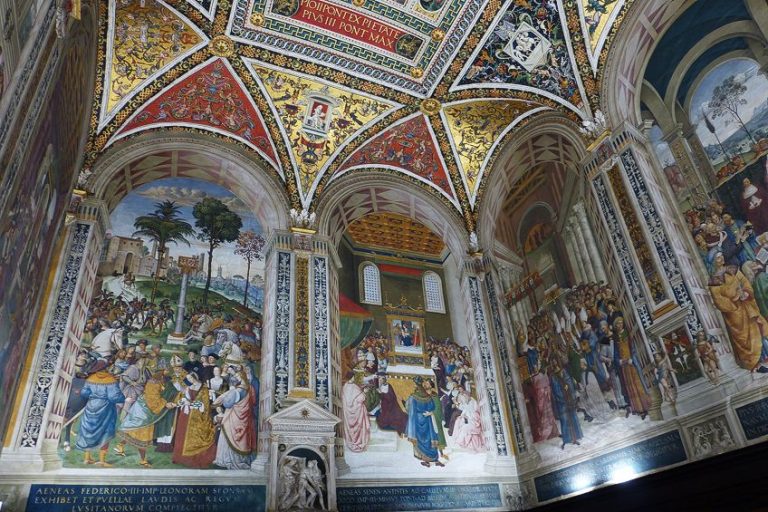
In the liturgy, the elevation of the Host—the moment the priest raises the consecrated bread—was the climax of the Mass. The Host was believed to be Christ’s body. Paintings of the Last Supper or the Crucifixion on the altar wall framed this act, turning the priest’s hands into sacred theater. The viewer’s body responded: kneeling, bowing, weeping.
Reliquaries—containers for saints’ remains—were masterpieces of bodily art. The reliquary of Sainte Foy in Conques is shaped like a seated saint, her face a golden mask, her body a jeweled throne. Inside: a fragment of bone. The faithful didn’t just see the body—they touched it, kissed it, prayed before it. The artwork made the invisible sacred tangible.
Even architecture played a role. Gothic cathedrals were designed to move the body. The nave pulled worshippers forward like a spine. Stained glass bathed them in colored light, altering perception. The body walked, knelt, stood in rhythm with doctrine. Every step was a prayer.
Beyond the Church: The Body in Marginal Life
Not all medieval bodies served God or king. In the margins of manuscripts, we find a different vision—bodies in revolt.
Grotesques, hybrid creatures, peasants defecating, monks with erections—these appear in the borders of prayer books and psalters. The Luttrell Psalter is infamous for its vivid depictions of rural life: a man vomiting into a bowl, another being spanked by his wife.
These images aren’t random. They form a visual counter-narrative. While the central text glorifies God, the margins expose the messy reality of the body—hungry, leaking, desiring. Some scholars interpret them as satirical, others as cathartic. But they reveal a truth: the body cannot be fully sublimated. Even in a world that tried to spiritualize flesh, the physical insisted on being seen.
These marginal bodies also mocked authority. A bishop with donkey ears, a knight fighting a snail—these were coded critiques of power. The body, even in caricature, became a site of resistance.
Conclusion: The Body Was Never Just Flesh
In medieval art, the body was never merely biological. It was a stage for divine drama, a tool of political command, a measure of moral worth. To depict a body was to argue about salvation, hierarchy, and the nature of power itself.
Today, we might see these images as distant, stylized, even strange. But their legacy endures. When politicians pose with religious leaders, when activists use their bodies in protest, when artists depict suffering to provoke empathy—we’re still using the body as a symbol. The medieval fusion of theology and politics through bodily representation didn’t vanish. It evolved.
To study medieval art is to understand how images shape belief. And if you walk into a cathedral, stand before a crucifix, or flip through a manuscript, remember: you’re not just seeing art. You’re seeing a body that was engineered to change minds, secure rule, and save souls.
FAQ
Why are medieval bodies often stiff and unrealistic? Medieval artists prioritized symbolism over realism. Stiff poses conveyed spiritual order, divine presence, and moral clarity—art was didactic, not decorative.
How did politics influence religious art? Rulers commissioned art to show divine endorsement. Coronations by saints, likenesses in church frescoes, and royal tombs all fused political power with sacred legitimacy.
What role did relics play in medieval art? Relics were physical remains of saints, housed in elaborate containers (reliquaries). The art around them turned the body into a focal point of worship and pilgrimage.
Were all female figures in medieval art idealized or punished? Most were polarized: the Virgin Mary (pure) versus Eve or Magdalene (temptress). This reflected the Church’s emphasis on female purity and fear of female sexuality.
How did common people relate to these images? Most were illiterate. Art was their Bible. Images taught doctrine, modeled behavior, and offered hope of salvation through visual storytelling.
Did medieval art ever challenge authority? Yes—especially in marginalia. Grotesques, satire, and depictions of peasant life subtly mocked the powerful, offering a subversive counterpoint to official narratives.
Is there a modern equivalent to medieval bodily symbolism? Yes—political propaganda, protest art, and religious iconography still use the body to convey ideology, sacrifice, and power.
FAQ
What should you look for in How Medieval Art Turned the Body into Sacred Power? Focus on relevance, practical value, and how well the solution matches real user intent.
Is How Medieval Art Turned the Body into Sacred Power suitable for beginners? That depends on the workflow, but a clear step-by-step approach usually makes it easier to start.
How do you compare options around How Medieval Art Turned the Body into Sacred Power? Compare features, trust signals, limitations, pricing, and ease of implementation.
What mistakes should you avoid? Avoid generic choices, weak validation, and decisions based only on marketing claims.
What is the next best step? Shortlist the most relevant options, validate them quickly, and refine from real-world results.